Friday, November 22, 2013

Information and Application for 2014 Study Abroad Course Now Available

The application site for the 2014 course is now open.

There will be an info session on Tuesday (Nov. 26)  in the Theater Row Building on the MCV campus from 12-1 pm. 

The deadline to complete an application is December 27th, 2013.

Thursday, July 25, 2013

Appropriate Paper Technology (APT)

I wanted to post about a course that I just took over in the UK on Appropriate Paper Technologies (APT).  APT uses basic engineering principles to make weak materials strong (People Potential, 2013). The weak materials include paper and cardboard which are readily available at a low cost in developing countries. These materials can be recycled into surprisingly strong items of furniture. According to Paper Furniture Social Enterprises (2013), APT techniques were originally developed in Zimbabwe by Bevill Packer, who made furniture, toys and household items out of readily available paper materials. Today the use of these basic engineering principles and knowledge contributed by trained therapists has led to the development of specially adapted chairs, standing frames, ride-on animals and wheel chair inserts for severely disabled children in various parts of the world.


APT chair with insert
APT Walker


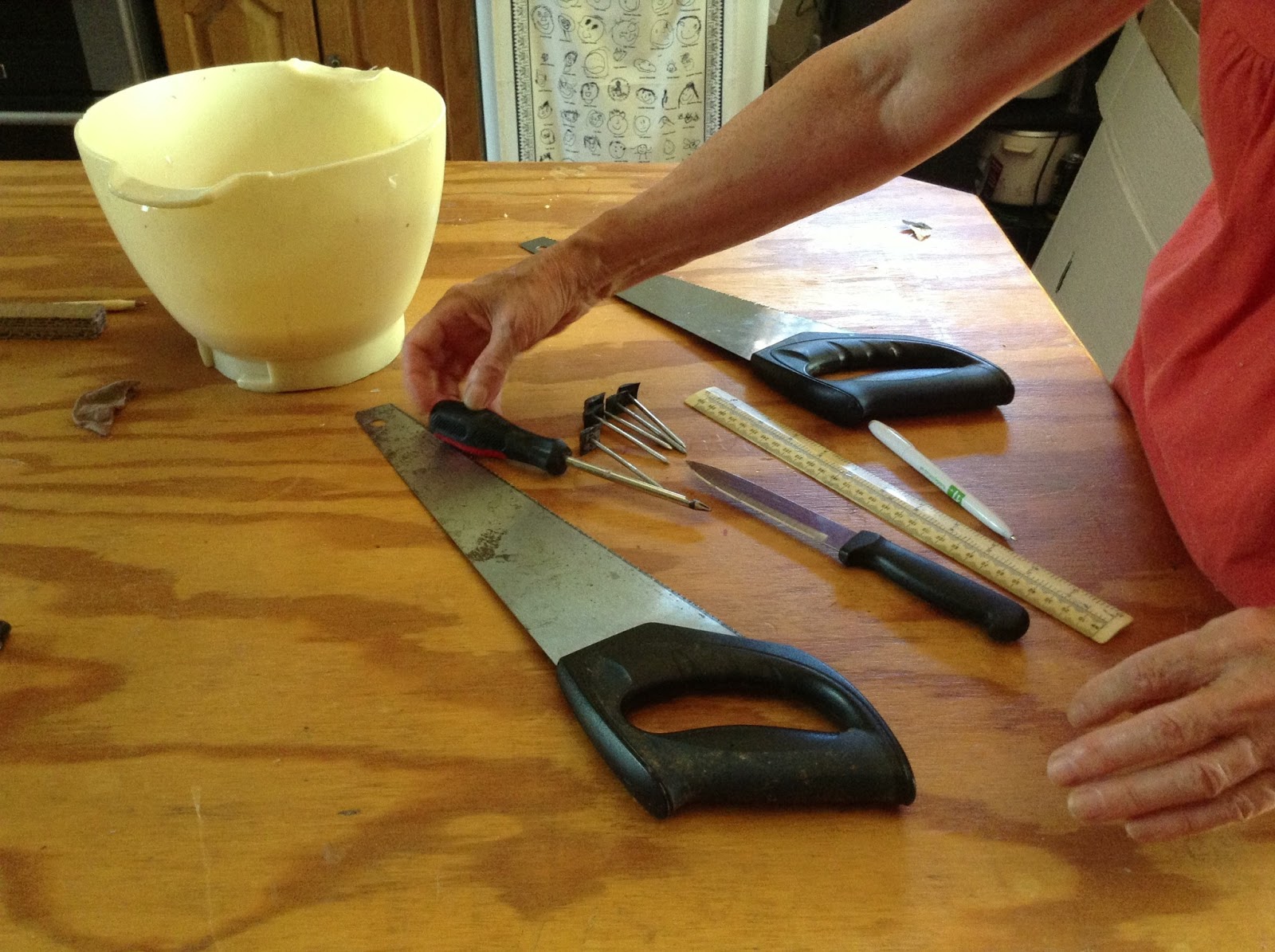
There are multiple advantages to using APT. First the raw materials such as cardboard are available and free (or very low cost) in Ghana. The tools needed to make the equipment are not expensive; most APT can be made using a kitchen knife. As noted by People Potential (2013) advantages of APT go beyond the lower cost; “the advantages include the versatility as unusual shapes and designs can be made according to the needs of the child, the measurements and the impairment”.


Saw, ruler, knife, roofing nails, bowl
Flour and Water make Paste
One of the barriers that our team of therapists/students has faced is the lack of available durable medical equipment, positioning equipment, and play materials designed for children with physical disabilities. While we have been creative in adapting some school and play materials, we continue to be challenged by the lack of equipment available for facilitating appropriate positions for functional and play tasks. I took, the APT 5-day course this summer to 1. learn a new skill set and 2. determine if our need could be met through the use of APT to build (in-country) equipment designed specifically for the children that we see in Ghana. 

Daniel and I took this course together and thoroughly enjoyed our time out on the English countryside with Jean, Ken, Dena, Catherine, and Flynn the dog (also a huge thank you to Richard for building the riding platform for my horse, see pictures below!). While I still need to practice my APT skills (and work on becoming more precise with my measurements  no eye-balling allowed!), I feel confident that this new skill set will be put to use soon as I continue to work with children in Ghana and provide learning opportunities for VCU students. Here are a few pictures from our trip:

Daniel with APT Toy


Daniel and Richard- Day 4, Horse has Wheels
APT sofa

APT double bed I slept in

Me with Horse Frame made on Day 2


Thursday, July 4, 2013

Tentative Dates for 2014 Study Abroad in Ghana

If you are interested in the 2014 study abroad trip to Ghana and want to block off some dates on your calendar, it looks like we will be traveling the last two weeks in May (May 18-31, 2014). Of course we will not have exact travel dates until much later, but hopefully this helps in planning/scheduling.

Thursday, June 27, 2013

Ghana 2013 Planning Trip- Mission Accomplished!

Thanks to a timely and generous grant from the VCU Global Education Office, I just returned from a 2-week trip to my favorite country of Ghana. The purpose of this trip was to establish or (in many cases) re-establish in-country relationships, identify opportunities for our VCU OT students to complete study-abroad courses, and train a cadre of faculty to lead and co-lead the course in subsequent years. In addition to myself the participants include Dr. Shelly Lane (VCU Professor of Occupational Therapy), Dr. Richard Thorton (Physical Therapist and Adjunct Professor of Occupational Therapy), Dr. Carole Ivey (VCU Assistant Professor of Occupational Therapy), Dr. Jodi Teitelman (Psychologist, Associate Professor of Occupational Therapy), and Kacie Hopkins (VCU OT Alum, Children’s Hospital of Richmond).

Our group at Children's Home of Hope, Cape Coast
In the two weeks we spent in Ghana we visited five centers which were classified as children’s homes, orphanages, or foster homes; these included Osu Children’s home (Accra Region), Nyame Dua foster homes (Teshie, Accra Region), Children’s Home of Hope (Cape Coast), and Eugemot Orphanage (Hohoe, Volta Region). We also visited two schools for children with special needs: The New Horizons School (Accra) and the Gbi School for children with intellectual disabilities (Hohoe). As part of our ongoing work with Sovereign Global Mission we also spent time at the CMB program for “street children” and at the Grace International School in the Adoteiman community.

Kacie, Shelly, Rev. Eric Annan, and me at Grace International School

While our goal was to set up future sites for our students, we also tried to contribute to these centers as much as possible. In addition to bringing donations (in the form of shoes, book bags, school supplies, and medical supplies), we also conducted developmental screenings on children living in the homes/orphanages and provided consultation on positioning, feeding, behavior, and IEP goal writing for staff at some of the schools. The screenings are something we can hope to continue in the future since they can be useful for teachers, caregivers and potential adoptive parents. While most of the children that we screened fell into “average” range, some were identified as “below average” and we were able to make recommendations for those children on site. There was also a clear need for in-services to teachers and caregivers on topics like ergonomics, seating and positioning (e.g. for tasks like feeding or writing), wheel chair repair/configuration, safe transfer techniques for families and caregivers, goal writing and monitoring in special schools, and development of fine motor and problem solving skills for children who do not have opportunities for manipulative play.

Shelly and Kacie evaluating Master Kofi in Teshie
Rick and his new friend at New Horizon School


As is usually the case in Ghana, the children that we saw were warm, loving, and hopeful despite often coming from or living in disadvantaged situations. Places like Eugemot Orphanage always feel to me like one big family with everyone looking out for each other; it’s like coming home for me in many ways. And as I have been able to see firsthand at Eugemot, orphaned children that have been raised with this type of love and support are capable of growing into successful young men and women who contribute back to the orphanage and the community. Similarly, children who have more obvious physical and intellectual disabilities are well supported at places like the New Horizon School in Accra, where the staff maintains an ongoing commitment to excellence in teaching and rehabilitation. While some of the children there may never be able to fully integrate into regular community life in Accra, they are able to spend their days being productive, learning a trade, earning money and being surrounded by friends and caring staff.

Children at Eugemot looking at themselves on Jodi's Camera
Young adult seamstress at New Horizon School


This was an amazing trip and I am so thankful to the Global Education Office (GEO) for this opportunity. I am more excited than ever to show Ghana to our occupational therapy students next year. In addition to the GEO, I would like to acknowledge our Ghanaian friends who helped coordinate this trip and invited us into their homes and schools: Rev. Eric Annan and Felecia Annan of Sovereign Global Mission, Joha, Paul, Muna, and Joe of Eban Project, Mama Eugenia Kahu of Eugemot Orphanage, Vanessa and Jocelyn at New Horizon School, and the best Ghanaian driver ever Vincent. We look forward to seeing you all next May!

 Stacey

Tuesday, August 23, 2011

Where in the World Have you Been?

So OK. It really looks like I dropped the ball on this whole project, I know. But here's what has been happening since the last post. In February 2010 I was accepted into the NIH K12 career development program for rehabilitation researchers. This amazing opportunity required a 2.5 year move to Gainesville, Florida where I am working with a neuroscientist to study sensory processing disorders in autism. I've been taking classes, running projects, working with students and trying to see just how far I can expand my brain. So...try to not to be too angry that the 2010 Ghana trip was cancelled because lot of good stuff is coming out of this training.

I am going to be Gainesville for one more year and then hopefully back to Virginia Commonwealth University where I will attempt to resume the Ghana OT Study Abroad trip. I have already begun contacting some of friends abroad and looking into how we can get re-connected. Really hoping to do some work at Beacon House and also to get back to the Volta Region. Maybe will write a grant in the mean time to try and get funding for the trip; you know because our economy is in such good shape that they are just handing grants out like candy nowadays (yeah right!). Will post more as things develop.

Thursday, November 5, 2009

2010 Program- Yes, it's that time again!

Well the course information for the 2010 program is officially posted. There has been a lot of interest so far, but the cost of the trip maybe a bit high this year because Delta is no longer offering the direct flight to Accra out of JFK. I have hardly had time to think about my goals for this years course/trip. I know once I get started on it though, I will have lots of ideas on how to make this trip even better than that last!

Saturday, July 18, 2009

What's Next?

I have become a follower of Penelope Trunk's Brazen Careerist blog. I don't take the information on there too seriously, but I find it entertaining and there are little pearls of wisdom that I can't help but reflect on and take to heart. One such blog talks about people who live in New York; that the people who live in NYC are optimizers, people who strive to make the best of themselves and who just don't settle for good enough. I have been called a perfectionist before, but I don't think that I am: I am fine with spelling mistakes on my blog for instance. But I do think I would fit the profile of an optimizer. I have difficulty relishing that I led a relatively successful study abroad course without then mulling over how it could have been better, or how I can make it better next time. There are two parts (at least) to this "betterment". There is better for the students educational experience and there is better in terms of providing service to people with disabilities in Ghana.

I will post later about the educational piece, but today I will give you my top three thoughts on how to better our service work for people with disabilities in Ghana.

1) See Less, Do More - While I loved being able to see something new everyday in Ghana, I think that our limited stints at most of the centers we visited resulted in our inability to accomplish anything sustainable or meaningful. In most cases we were seen as just another group of Westerners coming through for a tour. For this next trip I plan conduct service-learning projects at 2-3 sites; preferably with at least one of those sites being for adults with disabilities. Projects will be identified ahead of time, hopefully in conjunction and collaboration with in-country partners, and the students will spend the spring semester working on teams to prepare for project execution. During the trip, students will still get a variety of experiences but most of their work will be focused on one project at one center.

2) Clearly Establish Goals and Responsibilities- While there is something to be said for flexibility and adaptability, it can also be frustrating to have certain expectations for an experience and not have those expectations met when you have traveled half way around the world. In any relationship, it is important to have common goals and a clear outline of who will do what. In preparation for next year's trip, I would like to develop service-learning agreements with each of our partner sites. These agreements would list the common goal for the students visit (e.g. establishing a computer training program for adults with physical disabilities) and the responsibilities of the in-country director and their staff, the program director (me) and the students. This agreement could include monetary payments to the facility (because the expect a donation whether they ask for it or not)and service work other than training (because they might want you to also paint a building). If there is work that will need to be done by the program director before your visit (like making sure the site is wired for electricity) or after the visit (record client progress in attaining jobs at 3 months and 9 months) then this could be put in the agreement as well. This document will have no legal standing, but can serve to clarify goals, expectations, and responsibilities in a way that is more tangible than a conversation, an e-mail, or a handshake.

3) Get to the Higher-Ups: My students were quick to point out that changes were needed in Ghana and that these changes were going to need to come from higher up. In this case, higher up could either mean the government or people in positions of power such as tribal chiefs, university professors/graduates (people with high levels of education), church leaders, or wealthy businessmen. If we want any of our programs to have credibility or sustainability we will need to find people of prominence to partner with and continue to support our programs throughout the entire year. This will take time, but I will need to consider this in planning for the next trip.